

Youngstown State University is a public university located in Youngstown, Ohio, United States. Known for its strong regional presence and commitment to accessible higher education, the university offers a broad range of undergraduate, postgraduate, and doctoral programs. It serves students from Ohio, across the United States, and an increasing number of international backgrounds.
The purpose of this guide is to provide a comprehensive and realistic overview of Youngstown State University, focusing on academics, admissions, campus life, accreditation, and career opportunities. The guide explains how studying at Youngstown State University supports academic growth and long-term career development.
This article is intended for U.S. domestic students considering public universities, international students exploring American higher education options, parents seeking clarity on academic standards and employability, and education consultants advising students on university selection and career planning.
Overview of the University

Background and Establishment
Youngstown State University was founded in 1908 as a law school and later expanded into a comprehensive university. It became a public institution in the mid-twentieth century and has since grown to serve thousands of students annually. The university was established to meet the educational and workforce needs of the Youngstown region during periods of industrial and economic change.
Vision, Mission, and Academic Philosophy
The mission of Youngstown State University is to provide high-quality education, foster innovation, and contribute to economic and social development. Its academic philosophy emphasizes student-centered learning, applied education, and community engagement. Programs combine theoretical knowledge with practical skills to prepare students for professional and civic responsibilities.
Reputation in the U.S. and Internationally
Youngstown State University does not operate a campus in the UAE and is not regulated by UAE education authorities. Internationally, it is recognized as an accredited public university in the United States. While it primarily serves regional and national students, its degrees are generally accepted for employment and further education worldwide, subject to local credential evaluation.
Campus Overview

Campus Location
The main campus is located in Youngstown, Ohio, in the northeastern part of the state. The location places students near healthcare systems, manufacturing operations, engineering firms, and public service organizations, providing access to local amenities and professional opportunities.
Purpose of Campus Establishment
The campus was established to support higher education access and workforce development in the Youngstown region. As the local economy evolved, the university expanded its academic offerings to address emerging industries and professional sectors.
Campus Environment and Learning Atmosphere
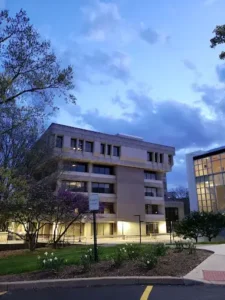
The campus environment blends historic buildings with modern academic facilities. The learning atmosphere emphasizes accessibility, collaboration, and applied learning. Many programs feature relatively small class sizes, allowing close faculty interaction and personalized academic support.
Accreditation and Recognition
Youngstown State University is fully accredited by recognized regional accrediting bodies in the United States and authorized by the State of Ohio to award undergraduate, graduate, and doctoral degrees. It is not governed by MOE or KHDA, as these authorities regulate institutions operating within the UAE.
Degrees awarded by the university are recognized across the United States and are generally accepted internationally. Graduates seeking employment or further education abroad may need credential evaluation depending on local regulations.
Colleges and Academic Programs Offered
Bitonte College of Health and Human Services
Undergraduate programs include nursing, health sciences, social work, exercise science, and health administration. Postgraduate programs focus on advanced nursing practice, counseling, and healthcare leadership, emphasizing clinical training and community-based learning.
College of Science, Technology, Engineering, and Mathematics
Programs include mechanical, electrical, and civil engineering, computer science, information technology, biology, chemistry, and mathematics. Postgraduate degrees emphasize applied research, innovation, and industry relevance.
College of Business
Undergraduate programs include accounting, finance, marketing, management, economics, and supply chain management. Postgraduate offerings include MBA and specialized business master’s degrees focused on analytical skills and ethical leadership.
College of Creative Arts and Communication
Programs include graphic design, art, music, theatre, media studies, and communication. Both undergraduate and postgraduate programs emphasize creative practice and professional communication skills.
College of Liberal Arts and Social Sciences
Programs include psychology, sociology, political science, criminal justice, history, and English. Postgraduate programs support advanced academic and professional pathways.
College of Education
Programs include early childhood, primary, secondary, and special education, as well as educational leadership and counseling at the postgraduate level.
Admission Requirements
Undergraduate Admission Requirements
Applicants must hold a recognized high school diploma or equivalent. Admission decisions consider academic performance, coursework rigor, and readiness for university-level study. Certain programs may have additional requirements.
Postgraduate Admission and GPA Requirements
Postgraduate applicants must hold a recognized bachelor’s degree in a relevant field. Minimum GPA requirements vary by program, and applicants may need to submit recommendation letters, a statement of purpose, and a resume.
English Language Proficiency Requirements
International students must demonstrate English proficiency through IELTS, TOEFL, or equivalent qualifications. Minimum score requirements depend on program and level of study.
Transfer Student Admissions
Transfer students may receive credit for prior coursework based on equivalency, grades, and departmental approval. Official transcripts are required.
Tuition Fees and Scholarships
Tuition Fee Structure
Tuition fees vary by residency status, program level, and academic discipline. As a public university, fees are lower for in-state students and higher for out-of-state and international students.
Additional Fees
Additional costs may include registration, technology, laboratory, studio, health service, and student activity fees.
Scholarships and Financial Aid
Financial support options include merit-based scholarships, need-based aid, departmental awards, graduate assistantships, and limited funding for international students.
Campus Facilities and Student Life
Academic facilities include modern classrooms, laboratories, computer centers, creative studios, and libraries with extensive digital and physical resources.
Student services include academic advising, tutoring, career counseling, mental health services, health clinics, disability services, and international student support.
Student life features clubs, cultural associations, sports teams, leadership programs, and campus events that promote engagement and personal development.
Faculty and Teaching Approach
Faculty members typically hold doctoral or terminal degrees and bring academic expertise along with professional experience. Many are involved in research, consulting, and community service.
Teaching methods include lectures, seminars, laboratory work, project-based learning, internships, and experiential education, with emphasis on critical thinking and practical skills.
Career Opportunities and Industry Connections
Students are encouraged to participate in internships, cooperative education, research projects, and community-based learning experiences.
Career services provide resume and cover letter assistance, interview preparation, career counseling, job search support, and employer networking events.
The university maintains partnerships with employers in manufacturing, healthcare, engineering, business, education, public service, and technology sectors.
Why Choose Youngstown State University

Key advantages include accessible admissions, a wide range of academic programs, strong regional industry connections, and a supportive, student-focused learning environment.
The university is well-suited for students seeking affordable public education, applied learning opportunities, and strong academic and career support.
Pros and Cons
Pros
- Recognized public university in Ohio
- Broad range of undergraduate and postgraduate programs
- Strong focus on applied and community-based learning
- Supportive campus environment and student services
Cons
- Limited global brand recognition
- Fewer international exchange opportunities than larger universities
- Some programs may have limited capacity
Frequently Asked Questions
Q1. Is Youngstown State University accredited?
A. Yes, Youngstown State University is fully accredited by recognized U.S. accrediting bodies.
Q2. Are Youngstown State University degrees internationally recognized?
A. Yes, degrees are generally recognized internationally, subject to local credential evaluation.
Q3. Can international students apply?
A. Yes, international students are eligible to apply for most undergraduate and postgraduate programs.
Q4. Is accommodation available?
A. On-campus housing and off-campus accommodation options are available.
Conclusion
Youngstown State University in Youngstown, Ohio offers an accessible academic environment focused on applied learning, community engagement, and career readiness. With diverse programs, experienced faculty, and structured student support, the university provides solid foundations for employment and further study.
Prospective students are encouraged to review program requirements carefully, align academic choices with career goals, and explore available support services. Visiting the campus or requesting official program information can help students make informed decisions about their educational journey.